Gastroscopy Services & Referrals

What is a Gastroscope?
We use an Equine Gastroscope to examine the inside of a horse’s stomach. It is a 3.6 meter long, flexible endoscope with a fibre-optic camera to enable us to explore the entirety of the horse’s stomach, from the larynx all the way down to the pylorus (exit of the stomach) and the top of the duodenum. Gastroscopy is the most definitive way to diagnose Gastric Ulcers in your horse.
Symptoms of Gastric Ulcers
-
Poor Performance, such as unwillingness to go forward or bucking/rearing when being asked to work
-
Behaviour Changes, for example they have become ‘grumpy’ or aggressive
-
Sensitivity around the stomach, for example when you tighten your girth or groom them.
-
Loss of Condition, this could be in the form of a dull coat or weight loss
-
If you have concerns ring us to discuss as the type and extent of symptoms of gastric ulcers in horses is very broad.


What happens during a Gastroscope?
Before the Gastroscope is performed, your horse has to be starved for at least 12 hours prior to the procedure. The stomach needs to be empty for us to be able to see the inside of the stomach clearly and for us to be able to spot any abnormalities.
During the procedure, we will sedate your horse to make it a smoother experience for them and to make it safe for everyone. Once comfortable, we place a dental gag on to avoid the horse damaging the gastroscope with it's teeth and then start to feed the gastroscope up one nostril, through the larynx and down their oesophagus.
We then inflate the stomach, which enables us to examine it clearly. At this point we now assess the stomach via the live video stream and you are able to watch everything we can see on the video monitor. We often undertake clinical discussions whilst we are undertaking the gastroscope. We record videos and take pictures of our findings for review later if required.
Treatment of Gastric Ulcers
-
If the vet finds ulcers they will discuss treatment and management options with you depending on what is found at the time.
-
There are several treatment options which the vet can tailor to treat the type of ulcers they have found and what would work best for your horse.
-
Treatment can be in the form of weekly injections, daily oral syringes, supplements or a combination of them all!
-
We recommend performing another gastroscope around 6 weeks after treatment has commenced to ensure that it has been effective. Some insurers may also require this too.
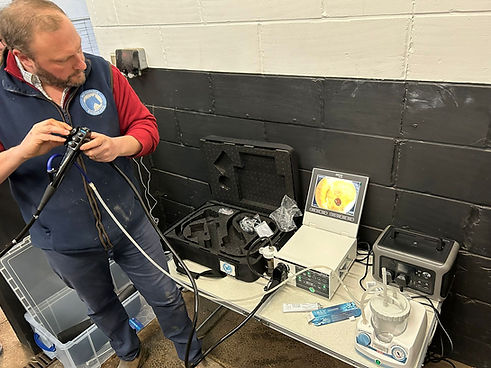

Gastroscopy at Mid-Suffolk Equine Vets
-
All of our equipment is fully portable so we are able to perform a gastroscope in the comfort of your own yard.
-
All we require is a safe, clean, hard standing area that is ideally under cover, we do not need a mains power supply!
-
If you would prefer to bring your horse to the practice we are also more than happy to accommodate you here.
If you think your horse is showing symptoms of Gastric Ulcers and would like to discuss booking in a Gastroscope please call the office on 01449 516000. Alternatively, please complete the form below and we will contact you to get booked in.